Linda Infante Lyons & Dr. Tanisha Jackson: Art as environmental activism and communal healing
This learning guide includes discussion questions to guide conversations and activities for students and learners of all ages.
Writing Team: Olivia Fried, Valeria Martinez Gutierrez, Miryam Nacimento, and Mariah Willor.
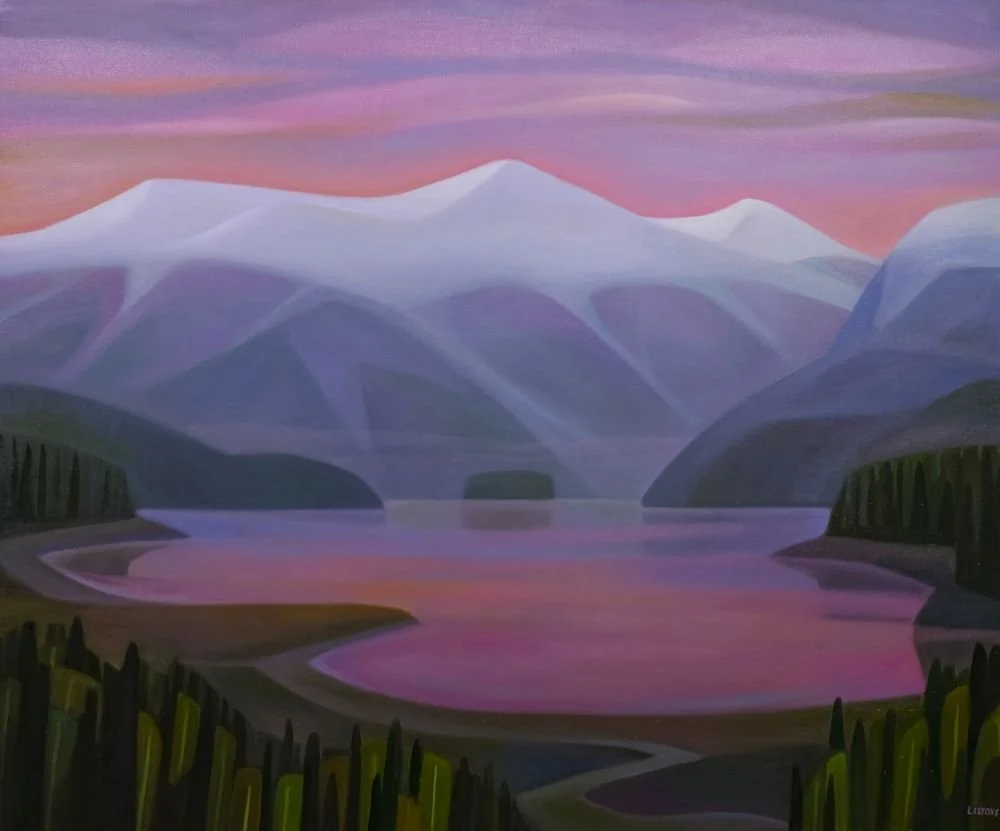
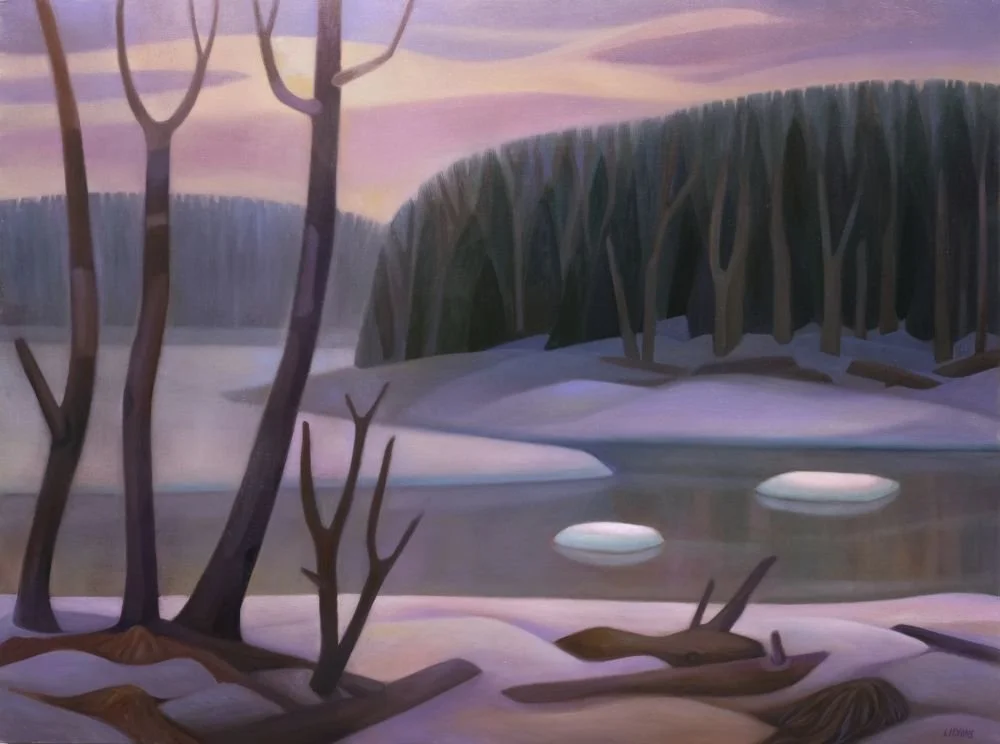
Landscape by Linda Infante Lyons
Understanding the Environmental Story & Issue
Art as environmental activism and communal healing
Art has a particular way of slowing us down, inviting feeling, and revealing our connections to place, memory, and one another. When we encounter an artistic representation of a place we care about, we are invited to see it anew, to attend to its shifting hues, and to experience it as a living presence. Such affective encounters reveal that art is not merely creative expression or entertainment, but a powerful pathway toward personal and social transformation and environmental repair.
Art can craft new narratives about environmental crisis and community wellness. Through painting, performance, and other expressive forms, communities assert their own understandings of ecosystems often countering colonial accounts that erase their presence and objectify living environments. Art also has a unique capacity to render visible what is typically ignored in environmental policy discourse, including forms of harm that unfold gradually and out of sight through environmental degradation, as well as ancestral and spiritual connections to land and experiences of loss and repair.
This learning guide explores community art as environmental activism through the work of two storytellers whose practices illuminate the intersections of community, environment, and healing: Linda Infante Lyons (Sugpiaq/Alutiiq), whose art re-centers Indigenous knowledge, and Tanisha Jackson, whose scholarship and curatorial practice uplift Black women artists, tracing how their creative practices sustain wellness in community. Together, their work invites us to imagine artistic expression as a form of resistance and a practice of collective renewal.
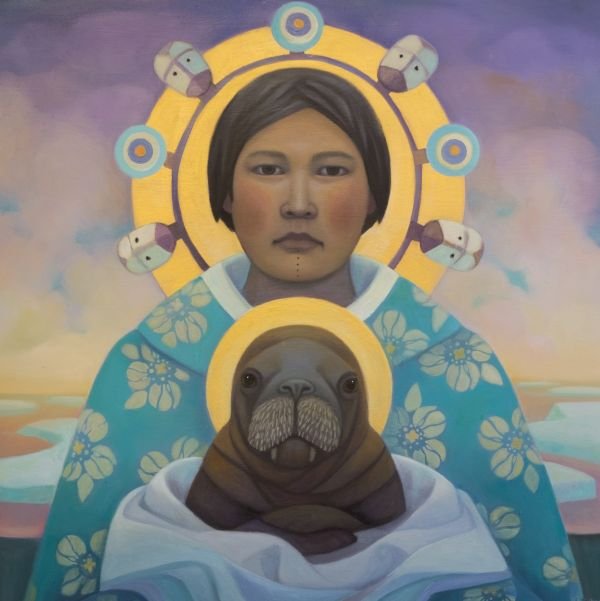
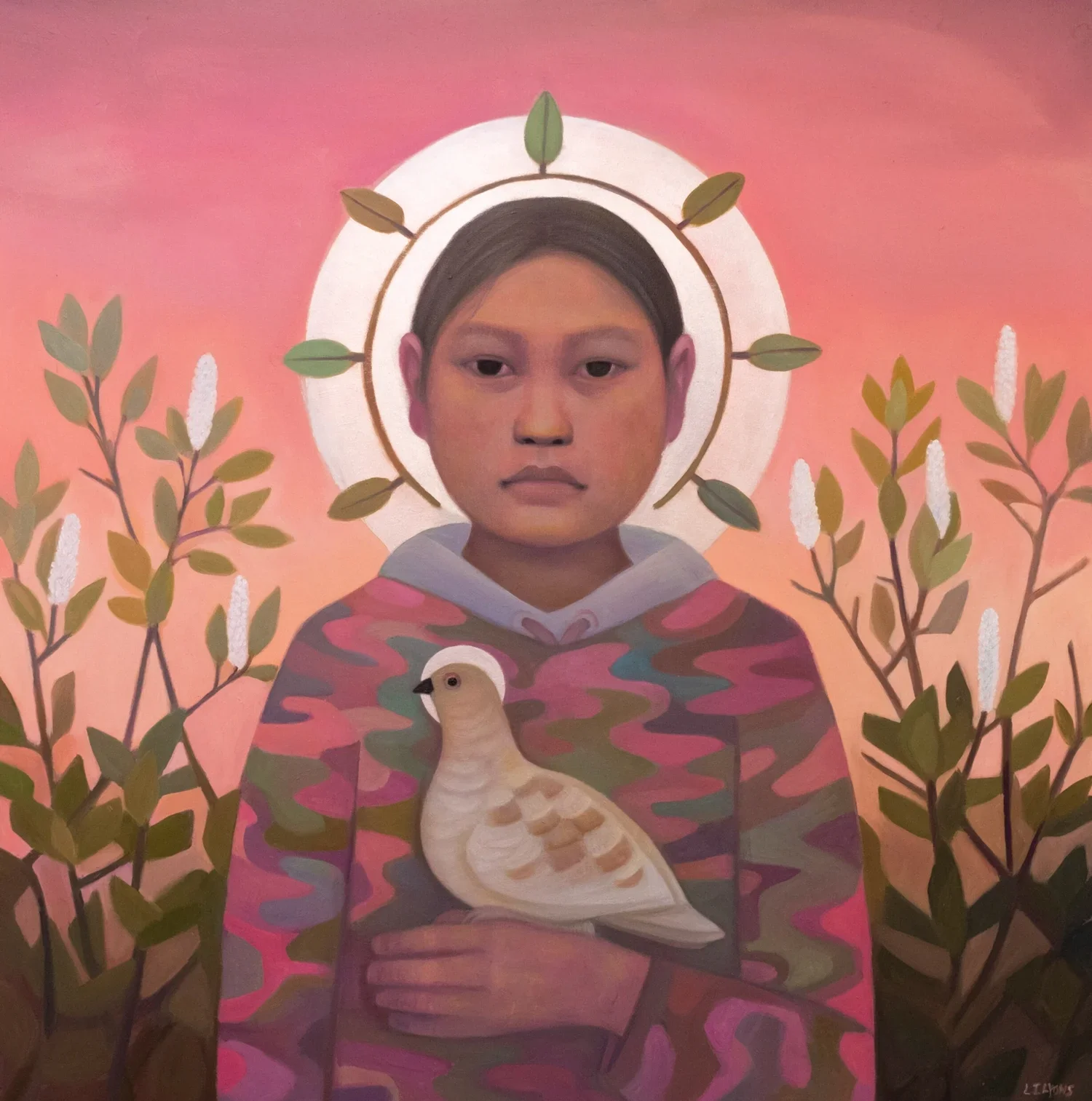
Icon Portrait by Linda Infante Lyons
Linda Infante Lyons | Painting from the Land: An Alutiiq Vision
Linda Infante Lyons lives in Anchorage, Alaska, 40 minutes away from a glacier that she has watched melt for decades — her art is inextricably linked to climate events. But her work extends beyond climate awareness and is fundamentally rooted in Indigenous relationality and grounded in connection with the natural world. Infante Lyons focuses on conjuring a positive, hopeful, and ultimately transcendent imagination with her artwork.
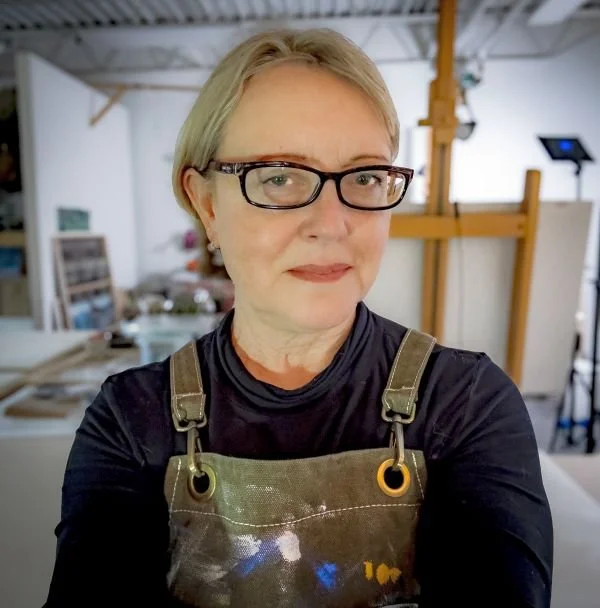
Courtesy of Linda Infante Lyons
From odes to the natural world and the spirits that inhabit it, to lessons in reciprocity, kinship, and community healing, Infante Lyons, an Alutiiq/Sugpiaq artist, tells stories primarily through landscape paintings and Alaskan Native icon portraits.
“The natural world around you is full of stories and those stories can form a bond and kinship with the land.” That bond, Infante Lyons says, can promote a relationship of care, a way of healing through love and awareness.
Infante Lyons finds that those interacting with her art often express feelings of peace, protection, and hopefulness. She refers to the “static and meditative composition,” that enables us to see beyond the material: “I simplify form to the most essential to describe a realm of spiritual realities. I am consistently lured by the promise of transcendence and the possibility of discovery in each new piece of work.” (Infante Lyons). In her landscape piece “Serenity Sound,”she swirls pinks and purples in the setting sky reflected in a body of water below. The symmetry of the painting creates a sense of stillness and groundedness anchored by the towering mountain range at the center of the work.
For herself and her own community, healing often means connecting with her ancestry and Alutiiq culture. Infante Lyons’ icon portraits are especially symbolic of this, as they represent the Indigenous worldview through the idea of reciprocity. The portraits – which combine Christian iconography and Alutiiq tradition – depict Native women holding animals and plants to convey a dynamic where all figures are equally sacred. She believes that if more people can learn from this worldview, our natural environment will be better cared for.
Aside from gallery work and exhibitions, Infante Lyons seeks to have this impact through her public art, designed to engage with local histories and communities.
When she first visits a community, Infante Lyons takes her lead from the people and their places.“I let them show me where they live. They tell me their stories. They’ll show me and say ‘this house here is where my great-grandmother was born.’” In this way, being an artist in a community that isn’t your own is about supporting the community’s healing in ways they themselves lead.
For Infante Lyons, the act of creating art precedes the stories she seeks to tell with her paintings. She sees art as a vehicle that creates the possibility for stories. “As you paint, there are things that happen, ideas, thoughts, connections to my ancestry that weren't forefront in my mind at the moment, (but begin to) grow deeper and deeper.
Dr. Tanisha Jackson | Communal Healing Through Creative Action
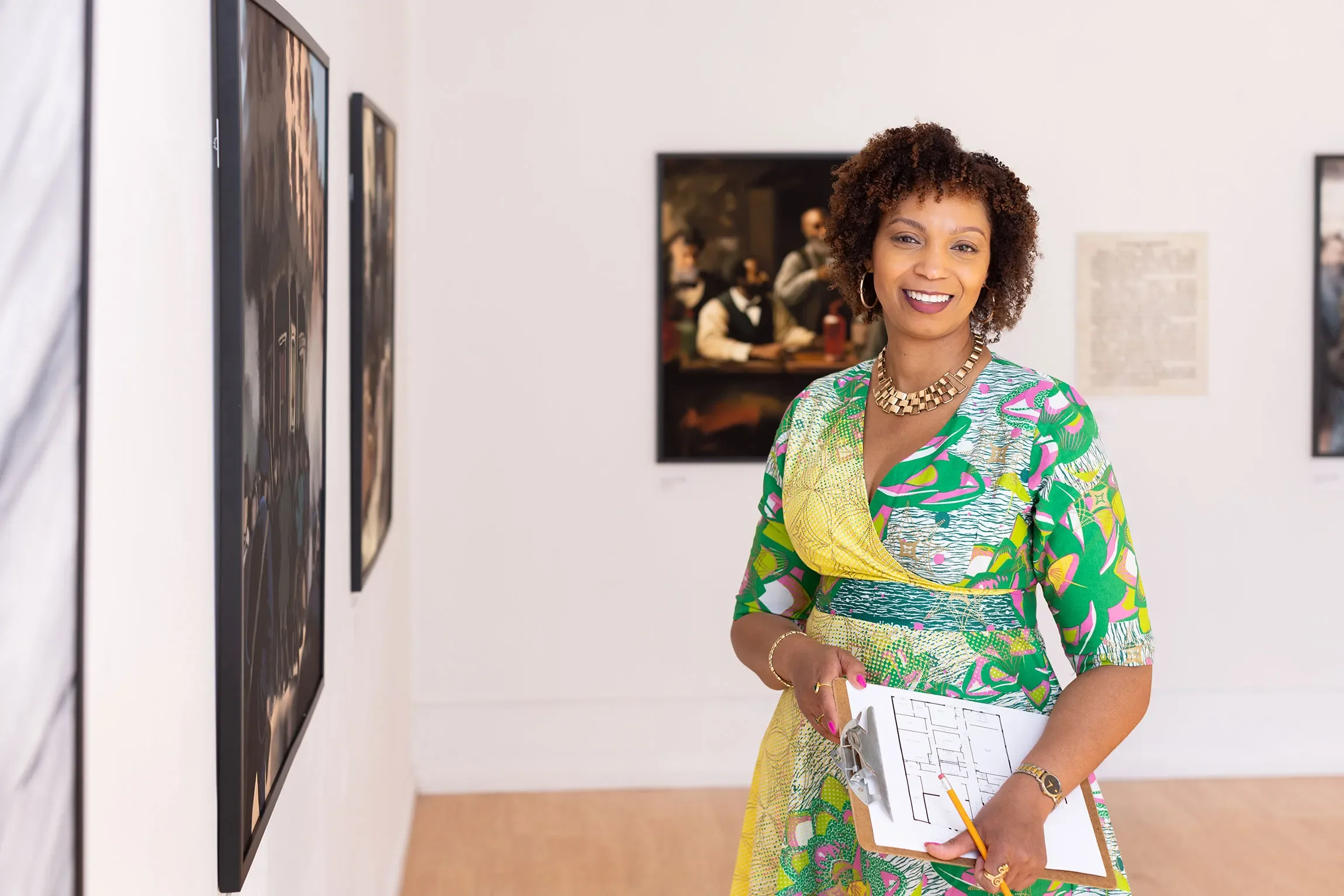
Courtesy of SU News
Eco-womanism, as articulated by Dr. Tanisha M. Jackson, “centers Black women’s ways of knowing as vital to environmental thought and action.” For Jackson, the term environment conjures images not just of oaks splaying into their silty soils, but of infinite relational networks between bodies, institutions, ancestors, lands, and everyday practices of care. Ecology, then, is inseparable from social justice, from spiritual wellness, cultural memory, and community.
Jackson practices eco-womanism through her curatorial work – both in her book, Black Women’s Art Ecosystems, and in her position as executive director of the Community Folk Art Center (CFAC). She maintains that, "knowledge is produced through making” – through art-making, teaching, mentoring, healing, and sustaining community. For her, curation is not about “prestige, but about care and accountability to community.”
Black Women’s Art Ecosystems is a “living archive” that “privileges experience, care, and relational knowledge over permanence or authority.” Through this shifting of values, Jackson is able to repurpose a Western and colonial structure –such as the traditional museum–to “reclaim a form that has historically excluded Black women and use it to chart alternative geographies of value.”
CFAC is an example of a site of knowledge production and sharing often overlooked by conventional cultural institutions – along with kitchens, gardens, classrooms, ritual spaces. Such sites, however, are precisely where cultural memory and survival are actively produced (Jackson). The Center is committed to the promotion and development of artists of the African Diaspora, rewriting the way people meaningfully engage with stereotypical galleries through public programming like exhibitions, film screenings, gallery talks, workshops, and courses in the arts like ceramics and dance, making it a richer experience for both artists and interacting audiences.
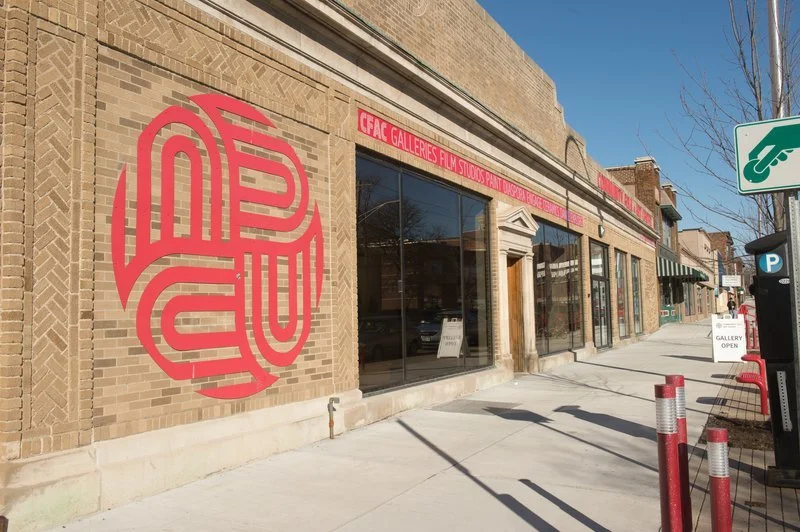
The ethic of eco-womanism that drives CFAC also shapes Jackson’s vision for Syracuse. She shares a dream in which Black women artists are structurally supported and recognized as essential to the city’s cultural and civic life. Universities like Syracuse University, she argues, must act as accountable partners by investing locally and honoring community knowledge as scholarship. Black women artists, specifically, must be recognized as cultural leaders rather than marginal contributors.
In these ways, eco-womanism approaches environmental action as an ongoing practice of care rooted in relation. As we live through a series of intersectional crises such as environmental degradation, racialized dispossession, economic precarity, and political violence – the practice of eco-womanism resists economically conditioned extractive models of living (Jackson). Modeling environmental stewardship grounded in reciprocity rather than domination is a moral imperative to sustaining a lasting symbiotic network of care; black women artists have long practiced this from communal labor to artistic expression and storytelling (Jackson).
Some Terms to Know
Public Art: artworks intentionally created for display in spaces accessible to the general public, such as parks, streets, plazas, and civic buildings. Unlike art confined to museums or galleries, public art engages directly with the social, political, and cultural contexts of the communities where it is located. Public artwork seeks to foster dialogue, commemorate histories, or shape collective identity within shared environments (Cartiere and Willis 2008).
Reciprocity: systems of mutual exchange in which relationships are sustained through acts of giving, receiving, and responsibility between individuals, communities, and the natural world. In many Indigenous knowledge systems, reciprocity is not limited to human social relations but also structures ethical relationships with land, animals, plants, and spiritual beings. These reciprocal obligations emphasize balance, respect, and ongoing care rather than one-directional extraction or ownership (Kimmerer 2013).
Kinship: a relational understanding of the world in which humans are not separate from, but inherently connected to, the beings around them. In Robin Wall Kimmerer’s work, kinship extends beyond human family structures to include plants, animals, waters, and lands as relatives rather than resources. This framework carries ethical responsibilities of care, respect, gratitude, and reciprocity, emphasizing that all beings participate in an interdependent web of relationships that sustain life (Kimmerer 2013).
Indigenous Icon portraits: Informed by principles of narrative sovereignty—the right of Indigenous peoples to define their own stories and meanings—and visual sovereignty—acts of self-representation that reclaim and reconfigure dominant images—Indigenous icon portraits refer to artistic representations of Indigenous figures that draw on visual conventions similar to religious icons, emphasizing spiritual presence, dignity, and cultural authority rather than purely individual likeness. These portraits often center the subject in a frontal, contemplative pose and incorporate cultural symbols, regalia, or sacred references that connect the individual to broader Indigenous cosmologies, histories, or community identities. For Infante Lyons, Indigenous Icon portraiture is a practice of indigenization in art, reorienting aesthetic frameworks toward Indigenous knowledge systems, ethical relations, and community accountability (Berlo and Phillips 2014).
Meditative composition: Meditative composition refers to an artistic arrangement of visual elements designed to encourage contemplation, reflection, or spiritual focus. Such compositions often feature balanced symmetry, simplified forms, central figures, or calm spatial organization that slows the viewer’s gaze and invites sustained attention. In both religious and secular art traditions, meditative compositions guide viewers toward introspection or a deeper engagement with the symbolic meaning of the work (Elkins 2001).
Eco-womanism: As Tanisha Jackson describes, eco-womanism centers Black women’s ways of knowing as vital to environmental thought and action. Eco-womanism understands the environment not simply as “nature,” but as a network of relationships – between land, bodies, ancestors, institutions, and everyday practices of care.
Relational repair: - process of healing disconnection, rebuilding trust, and restoring emotional and spiritual safety after conflict or hurt. This goes beyond apologies and into acknowledging mistakes, validating history and feelings, and showing commitment to restoring broken connections.
Ecology: - the study of the relationships between living organisms, including humans, and their physical environment; it seeks to understand the vital connections between plants and animals and the world around them.
Discussion Questions
From Anchorage, Alaska to Syracuse, New York, the production and curation of art by Infante Lyons and Jackson, respectively, respond to the political issues the land holds onto. They share local histories. The materials and methodologies facilitating the creation of a piece of art works to communicate meaning about the geographic places in which they reside. This communication is a physical act of storytelling that expands traditional historical narration. The effect of this establishes a foundation for decolonial ways of knowing, an incredibly urgent task tending to the health and well-beings of communities and their environments through art. We see art paving paths into decolonial thinking and relation to the environment.
Lyons and Jackson must both contend with the paradoxical relation of their presence within traditional museums and art galleries. Their work replaces the institutional ways of knowing/being that typically exist in these spaces to honor community-based ones. If you were given the chance to create an exhibit in a museum about your community, what traditions, experiences, or histories would you include?
What does “community knowledge” mean to you? Whose stories in your life are often left out, and how could you honor them?
How could your own creative skills— drawing, writing, photography, music, performance, etc—be used to share important stories that might not appear in textbooks?
Eco-womanism means learning how to take care of the Earth by listening to the stories and wisdom of Black and Indigenous women. Too many people for a long time ignored the voices of women, especially Black and Indigenous women, when making decisions about land, water, and communities. These women however have always had important knowledge about caring for families and neighborhoods, growing food, and passing down stories about the land. Eco-womanism says that taking care of people and taking care of the planet go together. You can’t have one without the other. When the Earth is hurting, communities are hurting too. When communities are treated unfairly, the environment often is too. Listening to lived experiences helps us make kinder, smarter choices for the earth.
What stories does your family tell about where they come from? Do any of those stories connect to land, weather, food, or nature?
If you made an artwork about protecting your neighborhood, what would you include?
What is one small thing you could do this week to help both your community and the planet?
Brainstorm: If art can make land speak, what kinds of histories become audible—and which ones remain contested or resistant?
How do specific materials (wood, paint, photography, space, installation) act not just as tools, but as political arguments about place?
In what ways does curating art in Syracuse differ from producing art in Anchorage when both are responding to land-based histories of colonization and displacement?
If traditional history is often written in text, what does it mean for art to become a physical archive of local memory? How does expanding historical narration through art challenge who is authorized to tell the story of a place? Can geography itself be understood as collaborator rather than backdrop in decolonial artistic practice?
Activities & Prompts
Below are writing prompts and activities for learners of all ages.
Listening to the Land Through Art
The work of Linda Infante Lyons centers land not as scenery, but as a living presence shaped by histories of extraction but also relationships of care and reciprocity between people and place. Through this exercise, you are encouraged to reflect on how art can make these histories and relationships visible.
Spend a few minutes closely observing one artwork by Linda Infante Lyons. Pay attention to details such as plants, animals, landforms, colors, textures, and any signs of human intervention. Notice the composition of the piece and how it addresses the viewer.
Pause and reflect before writing. Ask yourself: What relationships between humans and the environment does this artwork reveal? What histories or struggles might be embedded in this landscape?
Writing Prompt Activity
Imagine that the land, plant, or ecosystem represented in the artwork could speak. Write a short text—a paragraph, a letter, or a vignette—in which it tells its own story.
As you write, consider what this place has witnessed over time: moments of abundance and flourishing, but also histories of extraction, damage, or neglect. What has it lost? What does it remember (about people, animals, water, or seasons)? How has it been changed by human presence?
Finally, let the land speak about what it needs in order to continue living. This might include rest, protection, repair, respect, or a different way of being in relationship with humans. Focus on listening closely and allowing the voice of the land to guide your words.
Mapping a Living Art Ecosystem
In her work, Tanisha Jackson describes Black women’s art worlds as living ecosystems, networks of relationships that connect bodies, spaces, memory, care, and creativity. These ecosystems are not limited to galleries or museums, but include kitchens, studios, classrooms, gardens, community centers, and ritual spaces—places where art sustains life.
Writing Prompt Activity
Imagine one such ecosystem in the city where you live. It may be a real place you know—such as a studio, community center, kitchen, classroom, garden, or ritual space—a site referenced in the artwork, or a composite drawn from your imagination.
Write a short text—a paragraph, vignette, or reflective map—in which you trace how this ecosystem functions.
As you write, consider:
What relationships hold this space together?
What kinds of labor—emotional, creative, spiritual, communal—take place here?
How does art circulate as a form of care, healing, or survival within this ecosystem?
What histories of exclusion or neglect does this space resist?
Finally, reflect on what this ecosystem needs to continue thriving. This might include recognition, protection, resources, time, rest, or institutional accountability. Let your writing attend to connection rather than hierarchy, and to care rather than ownership.
This activity invites you to think of art not as an object, but as a relational practice that sustains wellness, memory, and collective life.
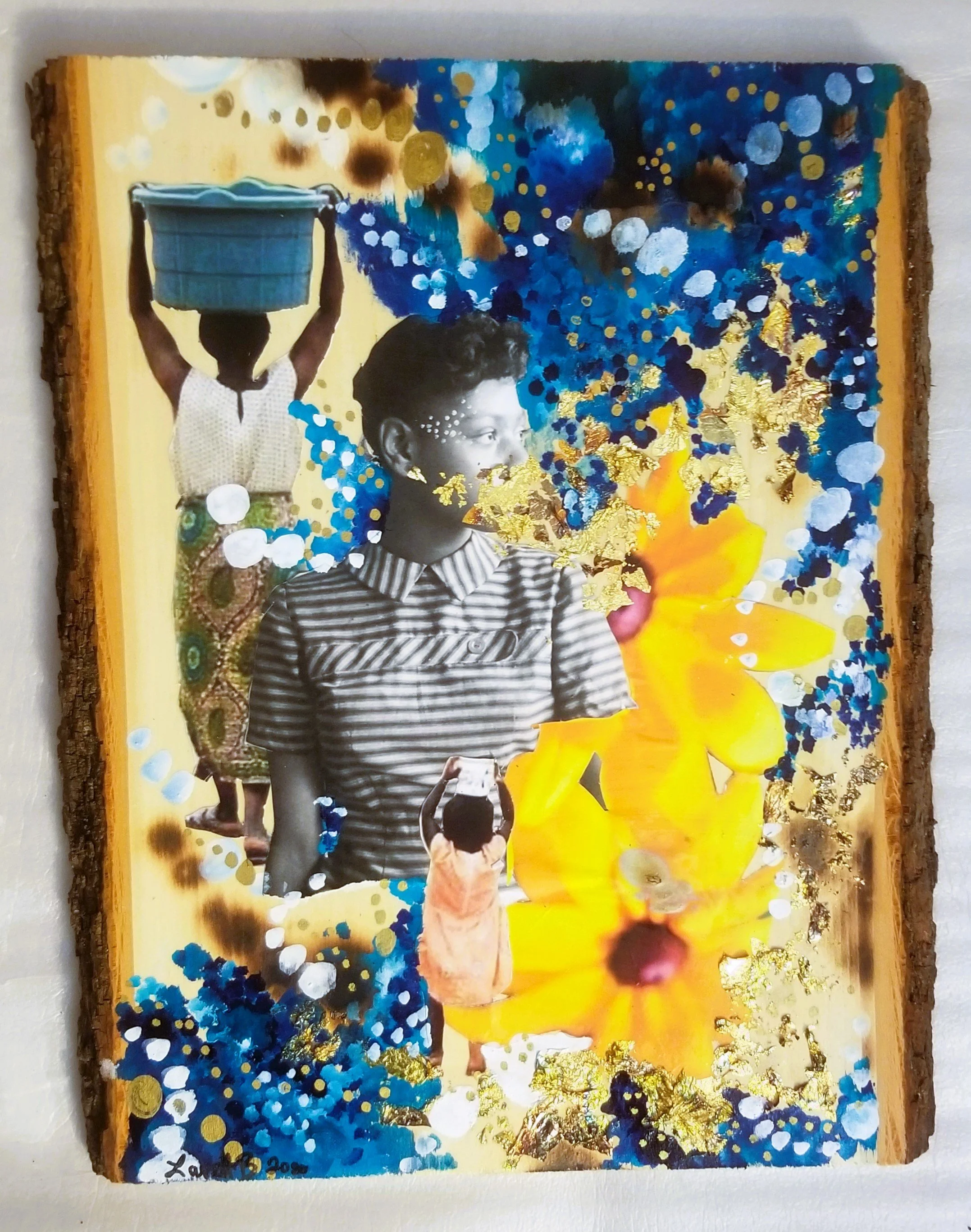
Building Your Own Ecosystem
A shoal is a shallow, shifting underwater formation made of sand or sediment that rises close to the surface, making it difficult to navigate water, and bring a boat to shore. In temporarily blocking boats, colonizers attempting to control indigeneity and blackness are delayed/disturbed. In The Black Shoals: Offshore Formations of Black and Native Studies, Tiffany Lethabo King uses the shoal metaphorically to describe “disruptions of conquest,” untraditional ideas capable of “chafing, rubbing up against normative thought.” She describes spaces where Black and Indigenous histories meet in ways that interrupt colonial attempts to map, control, and neatly separate them. In this light, we can consider this edition of Environmental Storytelling CNY as a practice of shoaling, which you can engage with as well.
Think of different histories, cultures, or identities you connect with that people often treat as separate. Where might they actually overlap? What might it look like if an artwork tried to hold those different experiences and histories in the same space?
Think back to your personal experiences of museums, monuments, murals, and public art. Why do you think history is often taught as separate stories rather than connected ones? What might change if we looked at history through relationships instead of categories? Why might artists be particularly good at creating these kinds of meeting spaces?
Choose two communities, histories, or movements that intersect or could be placed in dialogue. Create a small artwork that represents their meeting place. There’s no limit to what this can look like to you, but perhaps it’s: a drawing/collage, speculative map, sculpture made from found materials, a poem or written piece, a design for a mural or public artwork, etc. Consider What histories meet here? What tensions or solidarities exist between them? What new understanding emerges when they are placed together?